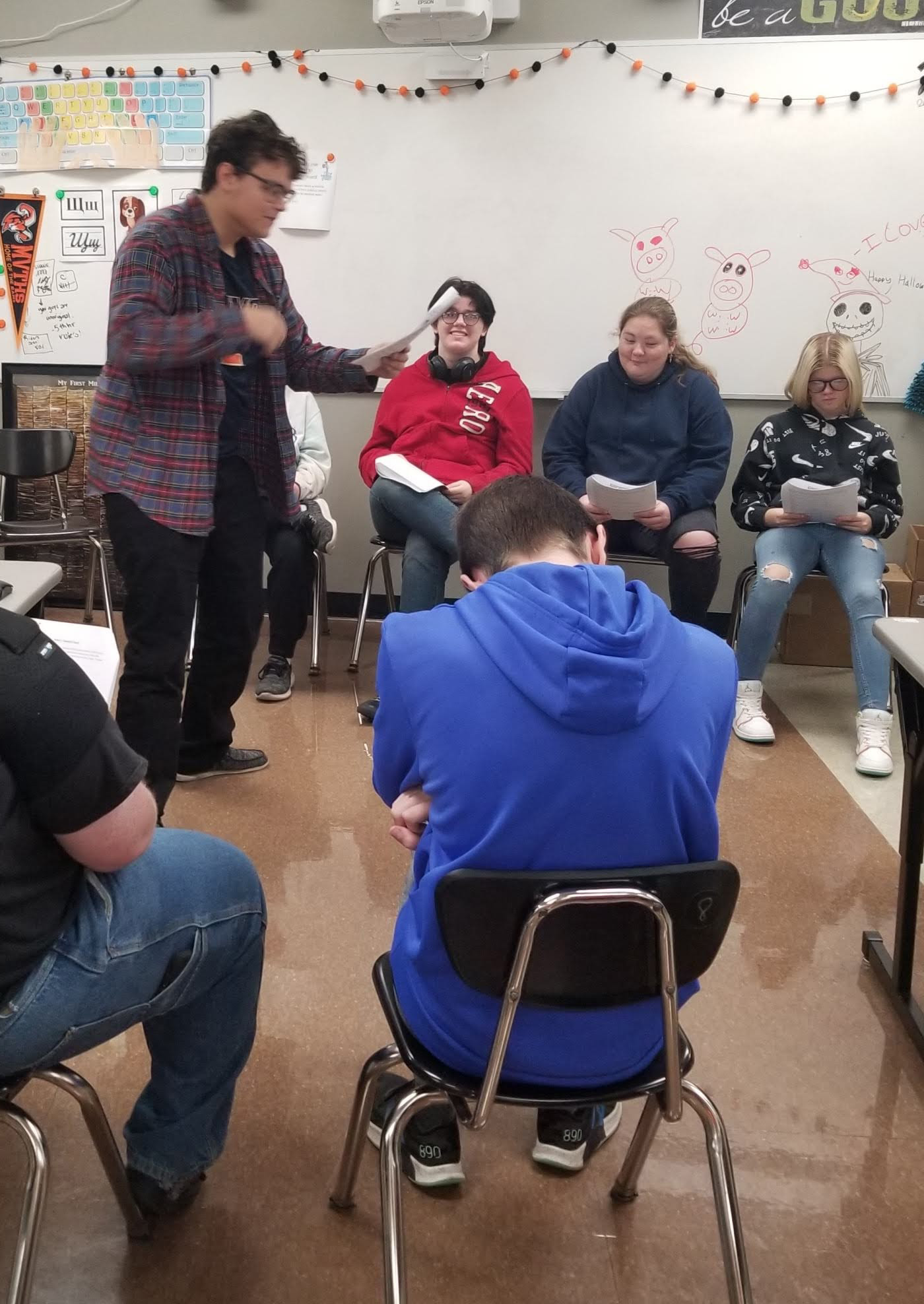
Students work together on shared projects and performances that ask them to interpret and create. As they work, they build language skills, deepen their understanding of culture, and learn to communicate and problem-solve as a team.
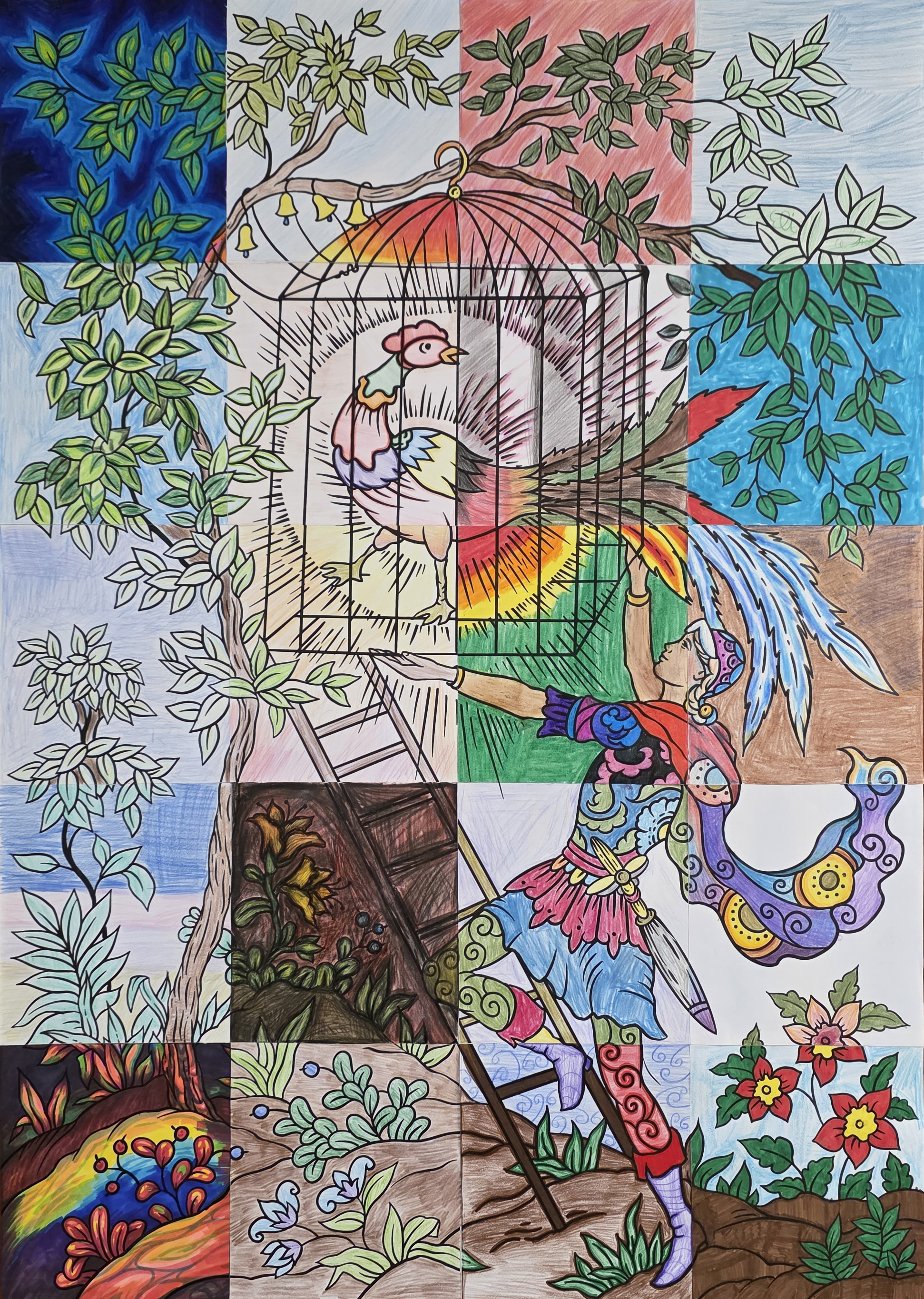
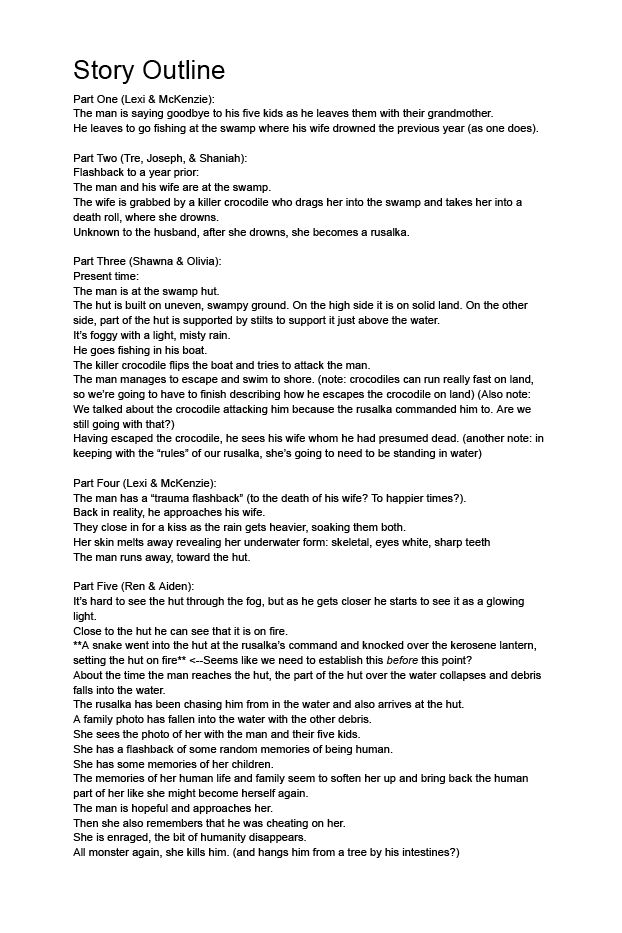
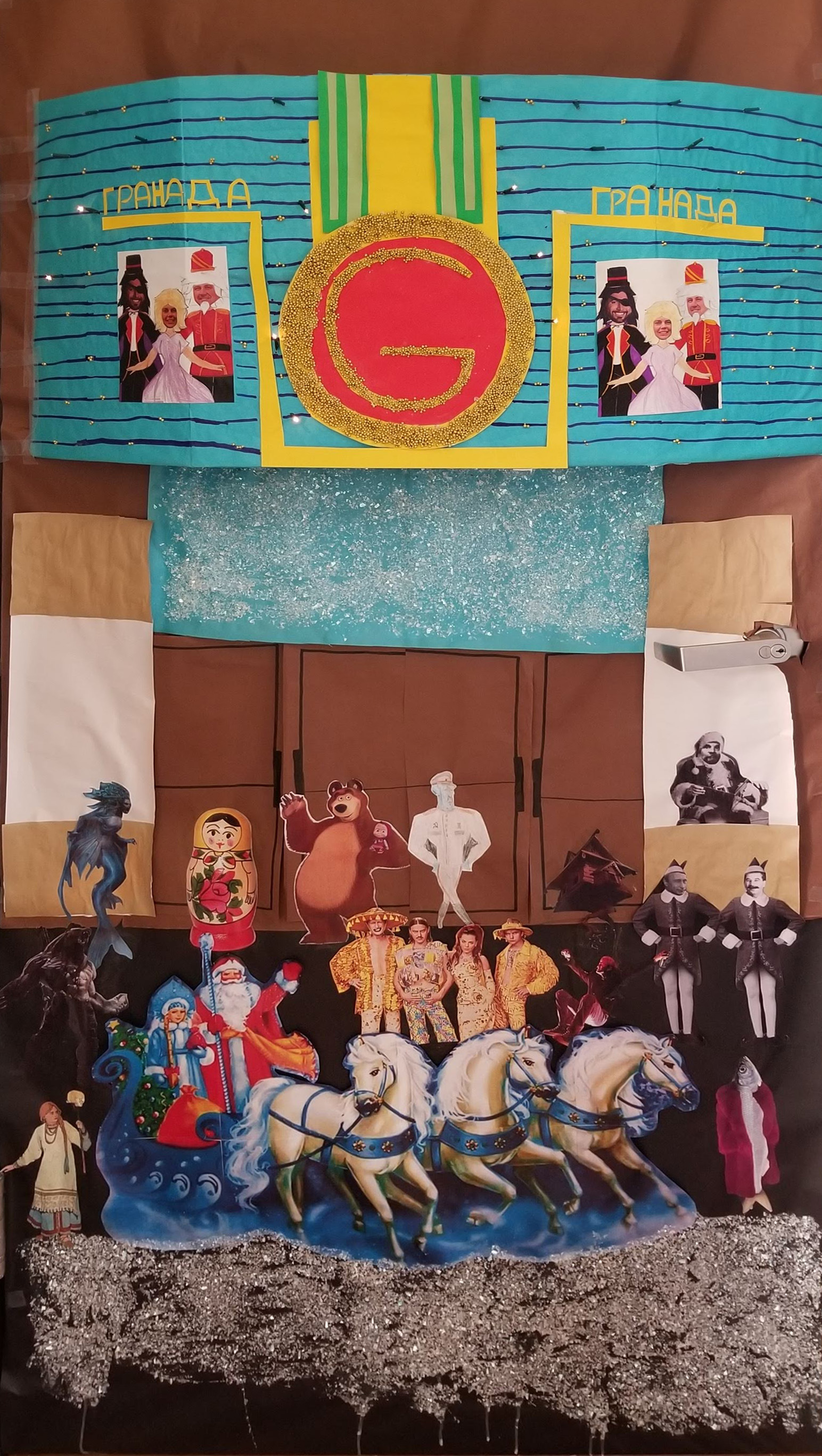
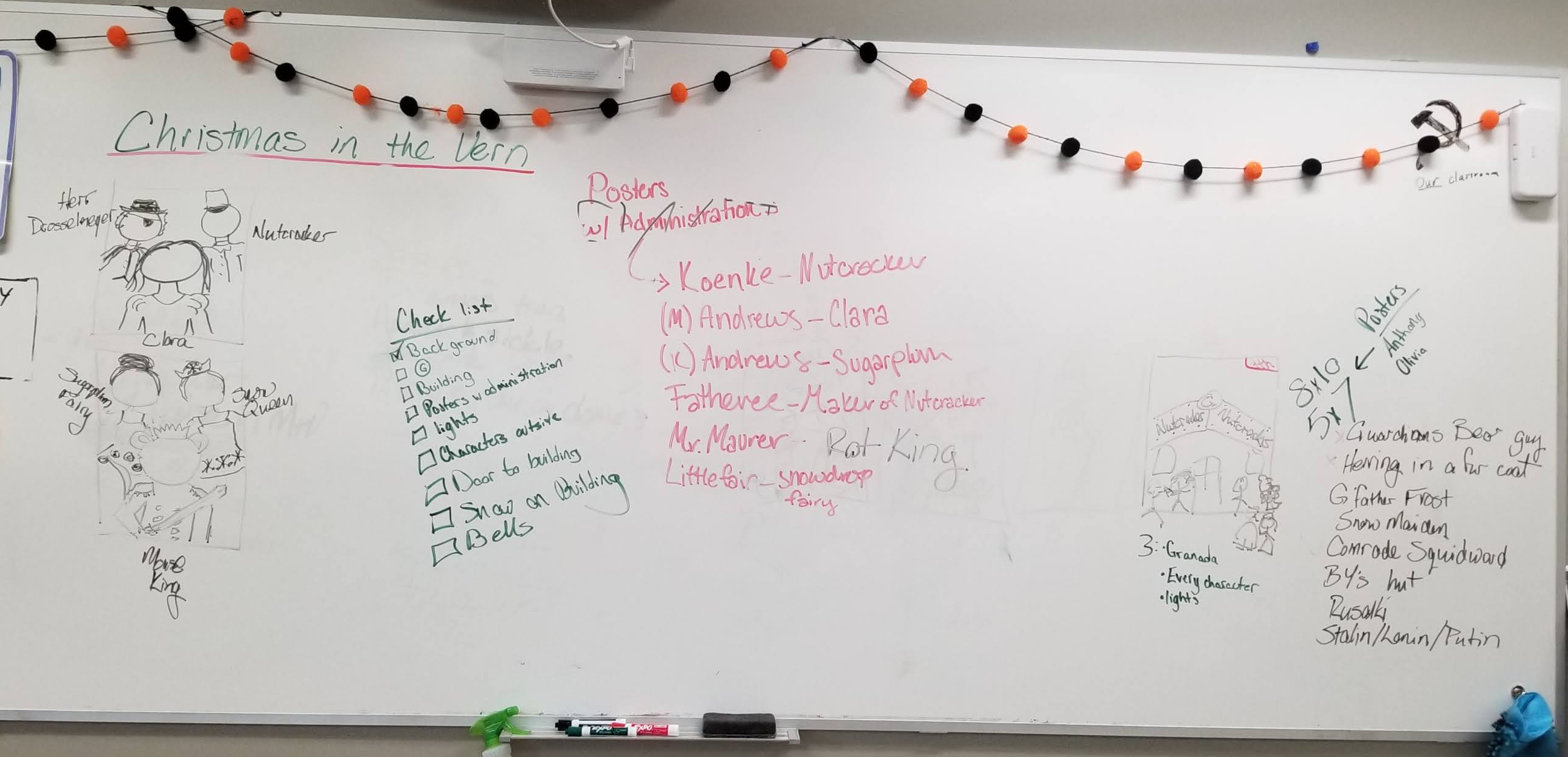
Students from both Russian I and Russian II collaboratively recreated a Russian folklore image, each contributing one piece to a larger mosaic. Differences in style and color were intentional, balancing individual expression with a unified final design.Russian II students collaborated as a whole group to develop the plot of a horror story centered on a rusalka from Slavic folklore. Then they divided into pairs and small groups to write the different sections of the story.Russian II students created this entry in a school-wide door decorating competition, incorporating numerous references to Russian folklore and tradition.The planning process for the door design included concept development (right), detail sketches (left), and character casting (middle).
Students collaboratively recreated a Russian folklore image, each contributing one piece to a larger mosaic. Differences in style and color were intentional, balancing individual expression with a unified final design.
In-class readers’ theater gave students the opportunity to interpret text aloud, building expression, delivery, and confidence through performance.
Russian II students created this entry in a school-wide door decorating competition, incorporating numerous references to Russian folklore and tradition.